Responsive, Not Reactive
By Kira O’Brien, Chief Impact Officer
These days, the most common question we’re asked at Emma’s Torch is, “What are you doing about ICE?”
It’s a heartbreaking reflection of where we are as a country—that conversations about our work begin not with our students’ talent, ambition, or extraordinary resilience, but with fear. Our students are chefs, leaders, and community builders- and they have every legal right to be here. And yet, the shadow of enforcement too often eclipses recognition of their strength.
The reality is that ICE’s presence cannot be ignored. As both an employer and a community, we take seriously our responsibility to protect our students, staff, and extended network. But protection alone isn’t enough. Safety should be the floor, not the ceiling. Our work is—and must always be—about dignity, stability, and the freedom to learn, work, and grow without fear defining the edges of what’s possible.
The Realities
In New York City, over 30% of workers in essential industries are immigrants. In restaurants, that number climbs to more than 60%. These are the hands that kept kitchens running and communities fed through crisis.
And yet, this workforce is made frighteningly fragile when fear takes hold. We saw this after the National Guard was deployed to Washington, DC, and restaurants experienced a 31% drop in reservations—diners said they didn’t feel safe with heavily armed personnel on the streets. If militarized visibility sends that message to patrons, what does it communicate to immigrant workers?
Whether in our classrooms or our cafés, the presence of ICE looms- not always visibly, but persistently. It shapes who shows up, who stays home, who takes risks, and who quietly disappears from opportunity altogether. The impact is felt in empty dining rooms, disrupted learning, and communities forced to navigate daily life alongside constant uncertainty.
Our Response
In the face of these realities, we’ve committed to being responsive, not reactive.
We live in a media landscape designed to provoke outrage. And while there are moments when we want to rage- when rage would feel justified- we also know we have a responsibility: to use our voice ethically, and always in service of our students. Responsiveness means thoughtful, informed action. It means centering care, not panic.
Here’s what that looks like in practice:
We leaned on experts. Though our work centers immigrant communities, we are not immigration policy experts. So we listened to those who are: Documented, the National Employment Law Project, and the National Immigration Law Center have provided critical guidance on keeping our spaces safe and grounded in legal best practices.
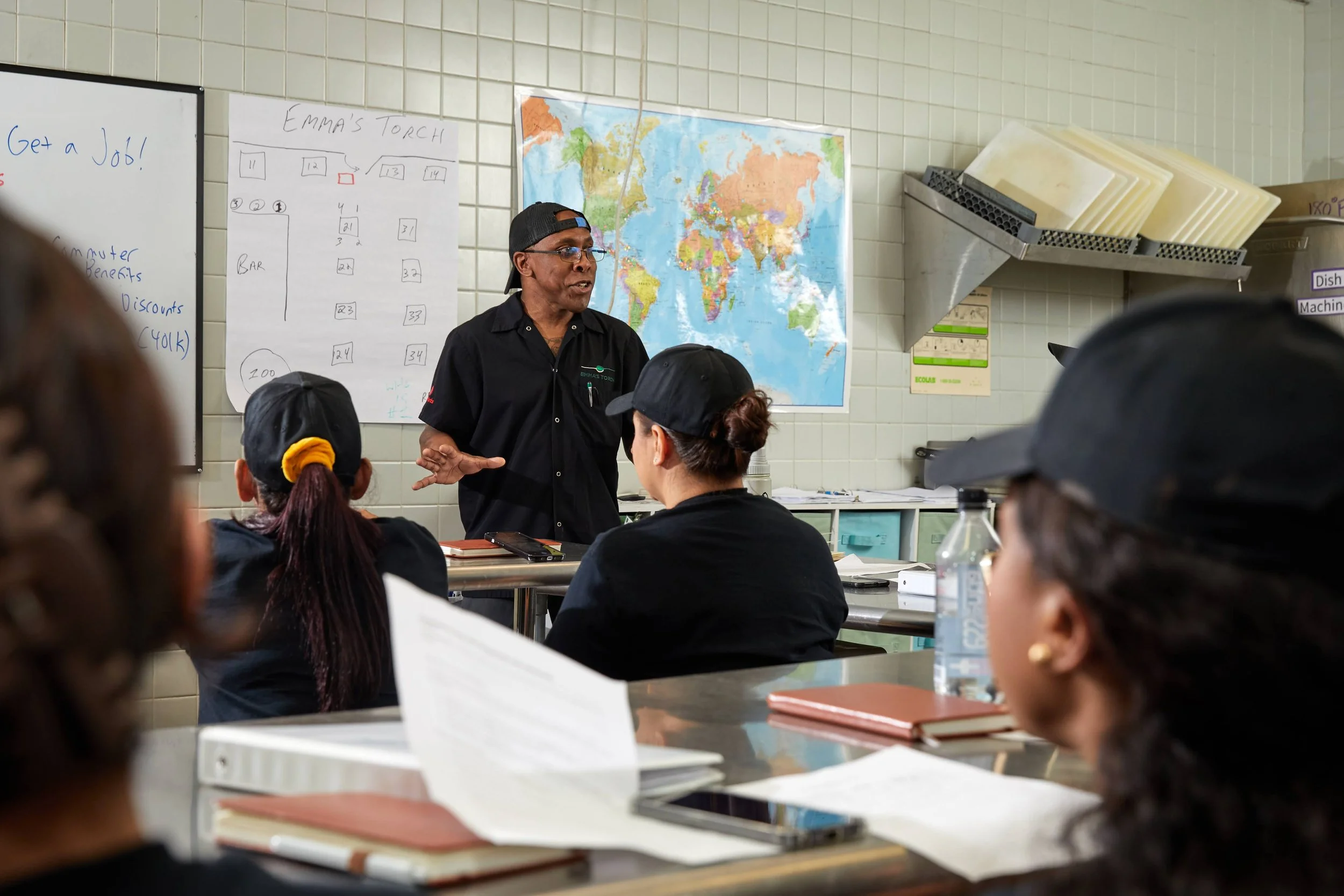
We trained our staff. We created and regularly update clear protocols to ensure all staff know their rights and responsibilities if ICE enters our space. That includes how to distinguish judicial from administrative warrants, how to calmly decline questioning, and who to contact. We've expanded our policies to include guidance for nearby raids and commuting safety.
We adjusted our spaces. Visitors to our cafés will now see clearly marked “staff only” areas. These physical boundaries help delineate the public from private space—important legal distinctions in any enforcement context.
We strengthened our curriculum. “Know Your Rights” training has always been part of our classroom experience. Now, with support from partners, we’ve deepened that programming to ensure our students feel confident navigating both workplaces and home environments.
We invested in mental health care. In partnership with CASES, our entire staff completed 8 hours of Mental Health First Aid training. Because safety isn’t just physical—it’s emotional and psychological. The ongoing threats to our community take a toll, and we are committed to showing up for one another in every way we can.
Looking Ahead
One phrase you’ll hear often at Emma’s Torch is, “It’s a marathon, not a sprint.” We’re here for the long haul. That means continuing to adapt to changing conditions, centering the voices of immigrant communities, and holding space for both action and rest.
Some days are heavier than others. But on those days, we look to our students and alumni—to their brilliance, their persistence, and their joy. They remind us why this work matters.
(And yes—a batch of warm chocolate chip cookies never hurts either.)